
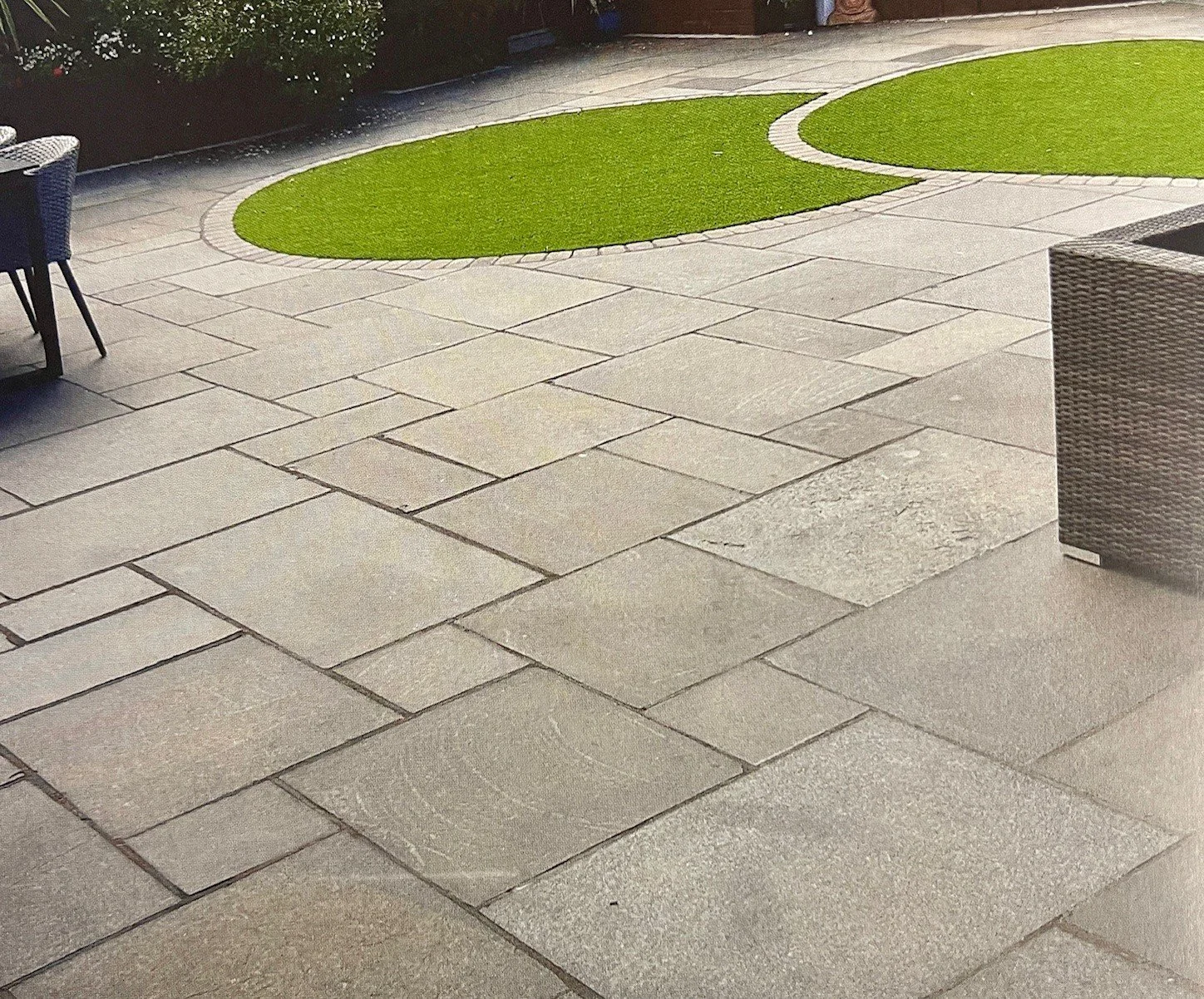
Two different sands do two unrelated jobs in a paver patio, and polymeric sand in Fort Worth, TX is only one of them. One sand is a bed the units sit on. The other fills the joints between them after they are laid, and mixing the two up is an easy mistake to make on a material list.
Big Tex Stone has supplied landscape and building stone in Fort Worth since 2005. This is a buyer’s guide rather than an installation manual, written for the homeowner or contractor standing in front of a material list and working out what to put on it.
Related: Concrete Sand vs. Cushion Sand: Which One Do You Need in Fort Worth, TX?
What Is Polymeric Sand Actually For?
Polymeric sand is a jointing material. It is graded sand blended with a binder that hardens when activated with water, so the joint sets up firm instead of staying loose.
The purpose is to lock the units against each other and keep the joint from washing out, and it is used with concrete and clay pavers, natural stone and porcelain tile.
That binder is also why it belongs nowhere near the bedding layer. A bed is supposed to stay slightly loose so the units can be set and tamped into it. A bed that hardens takes away that adjustment and gives the surface nowhere to flex.
Which Sand Goes Underneath Pavers?
Cushion sand goes underneath pavers, laid thin and screeded flat over a compacted base. Our cushion sand is the product used under patios and newly poured concrete to level the area and bring it up to grade, and it packs well compared to other sands.
Concrete sand is the coarser washed product used for mixing with cement and aggregate, and remix blends pea gravel with washed concrete sand for most concrete applications.
All three sit together in our sand and gravel range, and the differences between them come down to grain size and washing.
Why Do Paver Joints Open Up in North Texas?
Paver joints open up in North Texas because the expansive clay under most DFW patios swells through a wet spring and shrinks back through a dry August, and the base above it moves with it. Joints that were tight in April can show daylight by September on the same patio.
Rainfall arrives in bursts here rather than steadily. An intense spring or autumn downpour across a patio with open joints carries loose material out of them, which is the erosion a polymeric joint is designed to resist.
Related: Flagstone by the Pallet vs. Individual Pieces in Fort Worth, TX
What Should Be Confirmed Before Ordering Polymeric Sand?
Joint width, paver depth and color should all be confirmed before ordering polymeric sand. Joint width comes first, because products are rated for a maximum joint and some for a minimum as well.
Paver depth matters too, since a deeper unit holds a deeper joint and takes more material per square foot. Color is worth settling at the same time, because the joint reads as a grid across the whole surface.
We carry polymeric sand in Southern Tan, Bourbon Tan and Urban Gray, and a shade that disappears behind the paver gives a very different result than a contrasting one.
What Can the Big Tex Stone Yard Team Work Out for You?
Our yard team recommends materials and calculates quantities for your project. Bring the square footage, joint width and paver depth, and we will work through how much polymeric sand and bedding sand the job needs.
Confirming availability before a crew is booked is worth a phone call. Material for a weekend project is better reserved midweek than hunted for on a Saturday morning.
Order Polymeric Sand and Patio Materials in Fort Worth
Getting the bedding sand and the jointing material right is a five-minute conversation that saves a patio a great deal of trouble later.
Big Tex Stone stocks sand, gravel, flagstone and paving material at 5820 Old Hemphill Rd in Fort Worth, with fast loading at the yard or delivery. Call ahead with your dimensions and the yard team will have it ready.
Check polymeric sand colors and availability at Big Tex Stone.
In Summary
How much polymeric sand does a paver patio take?
Coverage depends on joint width and paver depth far more than on square footage, so two patios of the same size can differ by several bags. Bring the paver dimensions and the joint spacing to the yard and the team will calculate it with you.
What happens if bedding sand is used in paver joints instead?
Bedding sand in a joint stays loose, so it moves with water and traffic and needs topping up periodically. Some owners accept that on an informal flagstone path, and few accept it on a driveway.
Does Big Tex Stone deliver sand and polymeric sand in Fort Worth?
Big Tex Stone offers delivery as well as fast loading at the yard on Old Hemphill Road in Fort Worth. Calling ahead with quantities gets the order staged before you or the truck arrive.
Related: Concrete Sand in Fort Worth, TX: How to Order the Right Quantity and Get It Where You Need It